As specialty crop processing evolves, so do its users.
The Hybrid™ platform already had a proven internal mechanical system. Our role was to reimagine the exterior architecture, creating a housing that elevated the brand, improved serviceability, and expanded its appeal beyond its traditional customer base.
The objective was not to reinvent the machine’s performance but to redefine how it is perceived, maintained, and integrated into modern production environments.
Desktop Section
HYBRID™ Trimmer
Triminator
Overview
CLIENT
Triminator
ROLE
Design Language Strategy
Industrial Design
Interface Design
Mechanical Design
Industrial Design
Interface Design
Mechanical Design
Client Website
The Challenge
The client had established strong loyalty within a rugged, hands-on customer base. These operators valued durability and sweat-equity practicality. As the market expanded into new demographics and a broader range of professional users, it became clear the product needed to evolve visually and experientially.
The question became: How can the device honor its powerful, workhorse heritage while also appealing to a wider audience with evolving expectations around form, usability, and overall product experience?
Brand & Visual Strategy
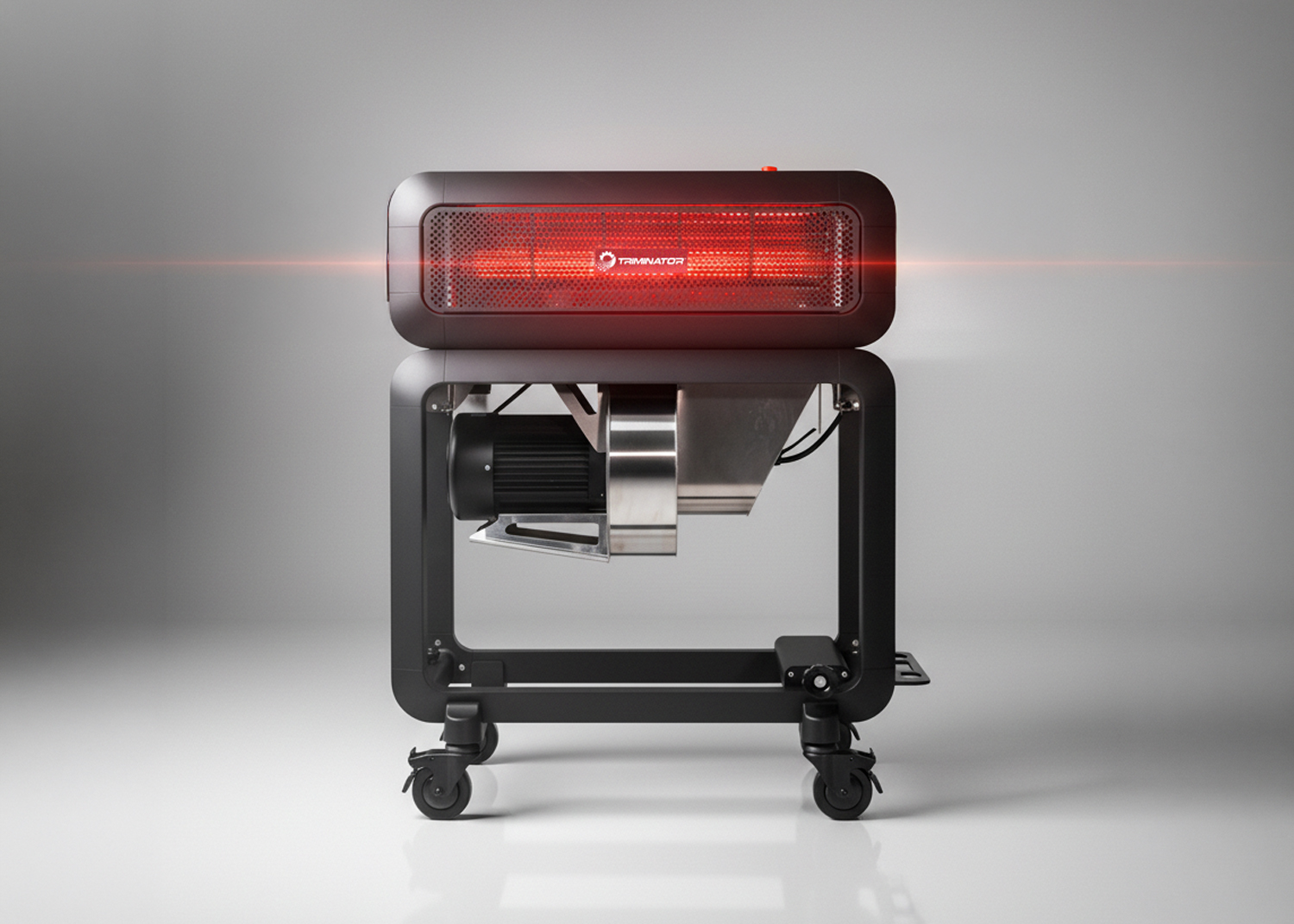
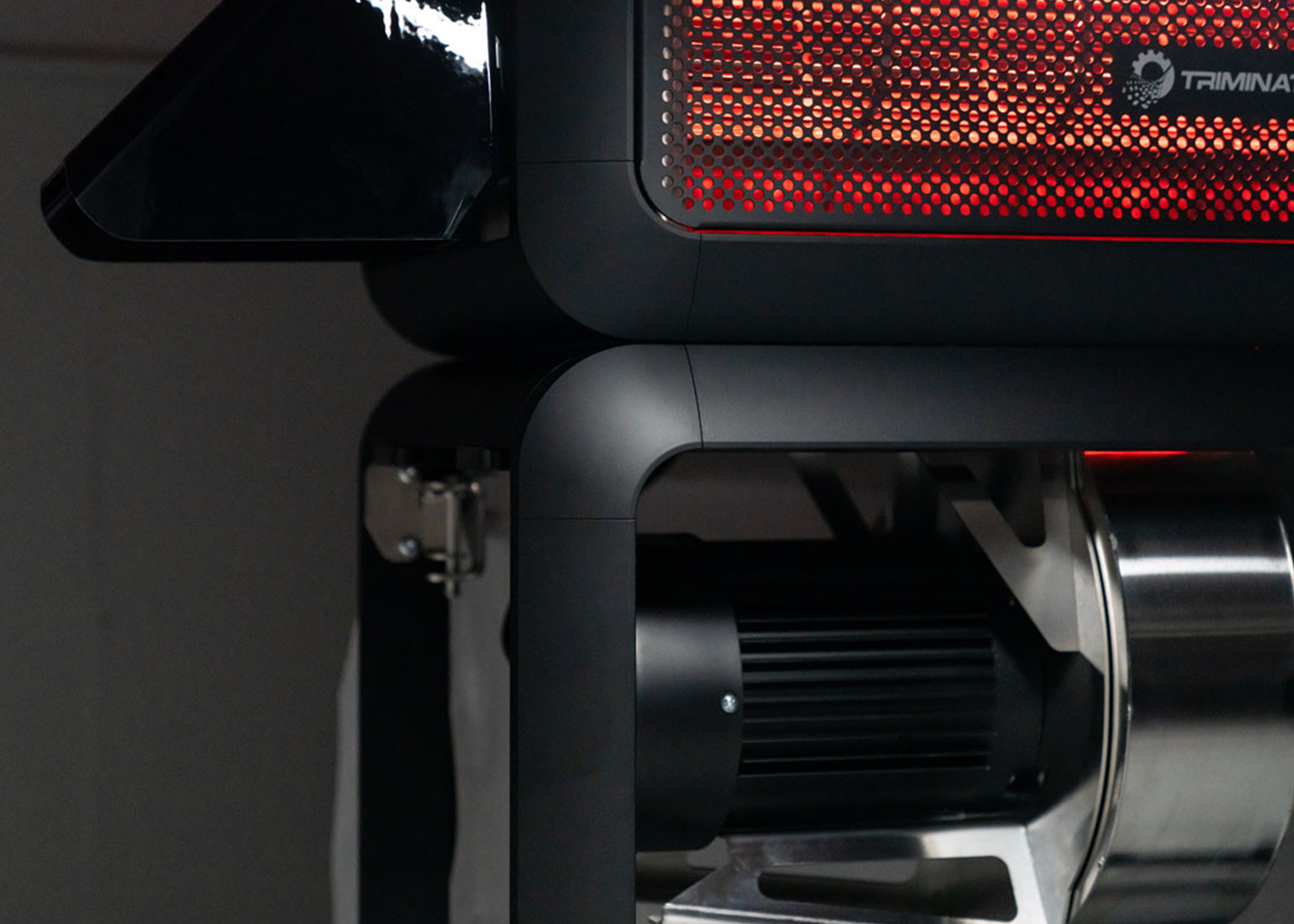
Rather than enclosing the internals in a heavy industrial shell, we developed a frame-based exoskeleton architecture.
The design intentionally exposes precision components, allowing users to see the mechanical capability of the system up close. This reinforces trust and communicates performance through transparency.
The silhouette shifts away from rugged utility cues toward a more refined, consumer-technology inspired form language:
• Cleaner geometry
• Controlled surfacing
• Intentional negative space
• Reduced visual noise
The result is a machine that feels powerful and capable, yet more sophisticated and contemporary. It bridges two worlds. Industrial reliability and modern product design.
The design intentionally exposes precision components, allowing users to see the mechanical capability of the system up close. This reinforces trust and communicates performance through transparency.
The silhouette shifts away from rugged utility cues toward a more refined, consumer-technology inspired form language:
• Cleaner geometry
• Controlled surfacing
• Intentional negative space
• Reduced visual noise
The result is a machine that feels powerful and capable, yet more sophisticated and contemporary. It bridges two worlds. Industrial reliability and modern product design.
Tailoring Form to Suit Application
The simplified exo-frame was not purely aesthetic. It was engineered to:
• Provide rapid access to key internal components
• Reduce unnecessary surface area where debris can accumulate
• Make maintenance intuitive and visible
The simplicity of the form was intentional — fewer seams, fewer hidden recesses, fewer collection points. The design reduces contamination risk while supporting regulated agricultural environments.
• Provide rapid access to key internal components
• Reduce unnecessary surface area where debris can accumulate
• Make maintenance intuitive and visible
The simplicity of the form was intentional — fewer seams, fewer hidden recesses, fewer collection points. The design reduces contamination risk while supporting regulated agricultural environments.
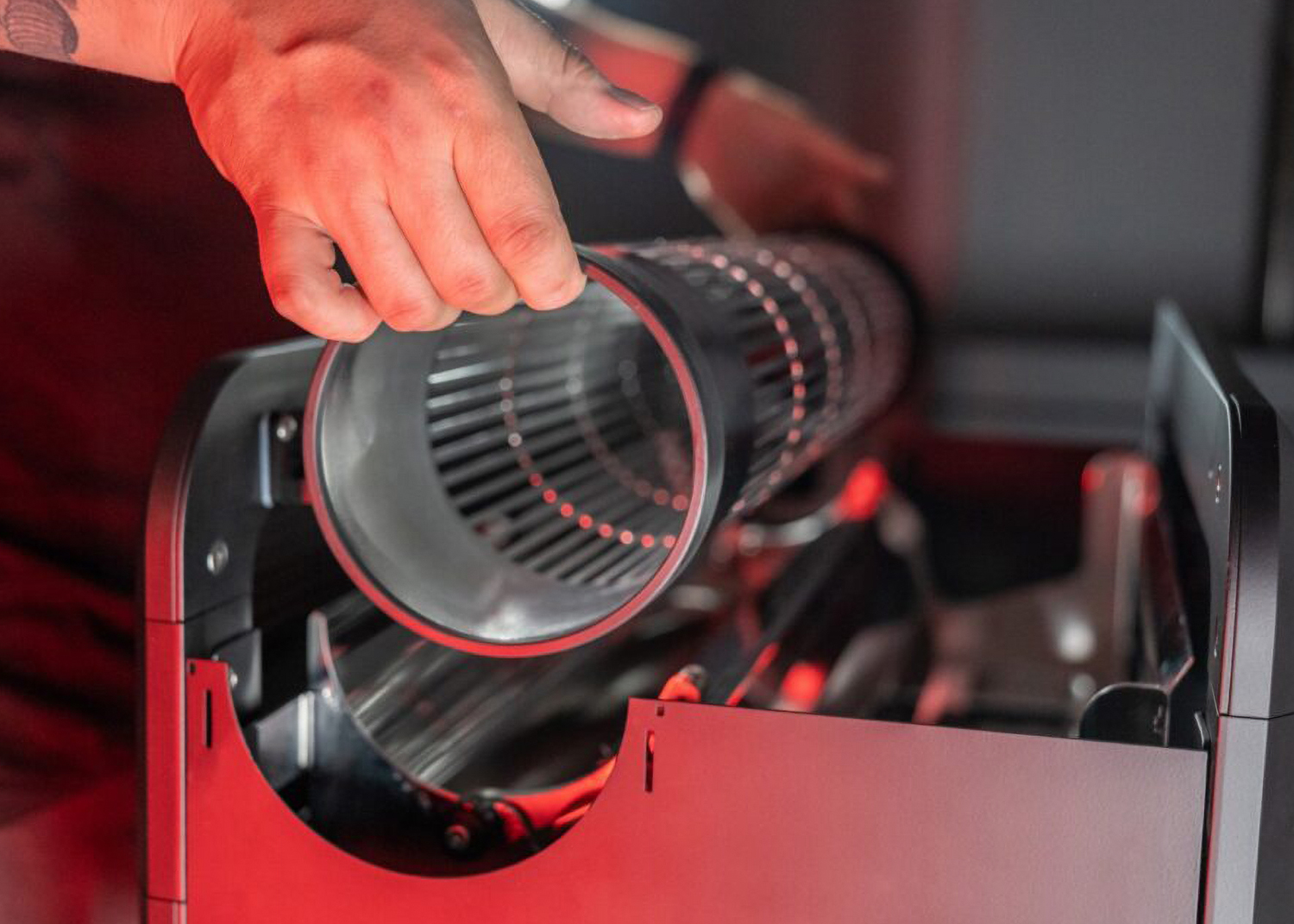
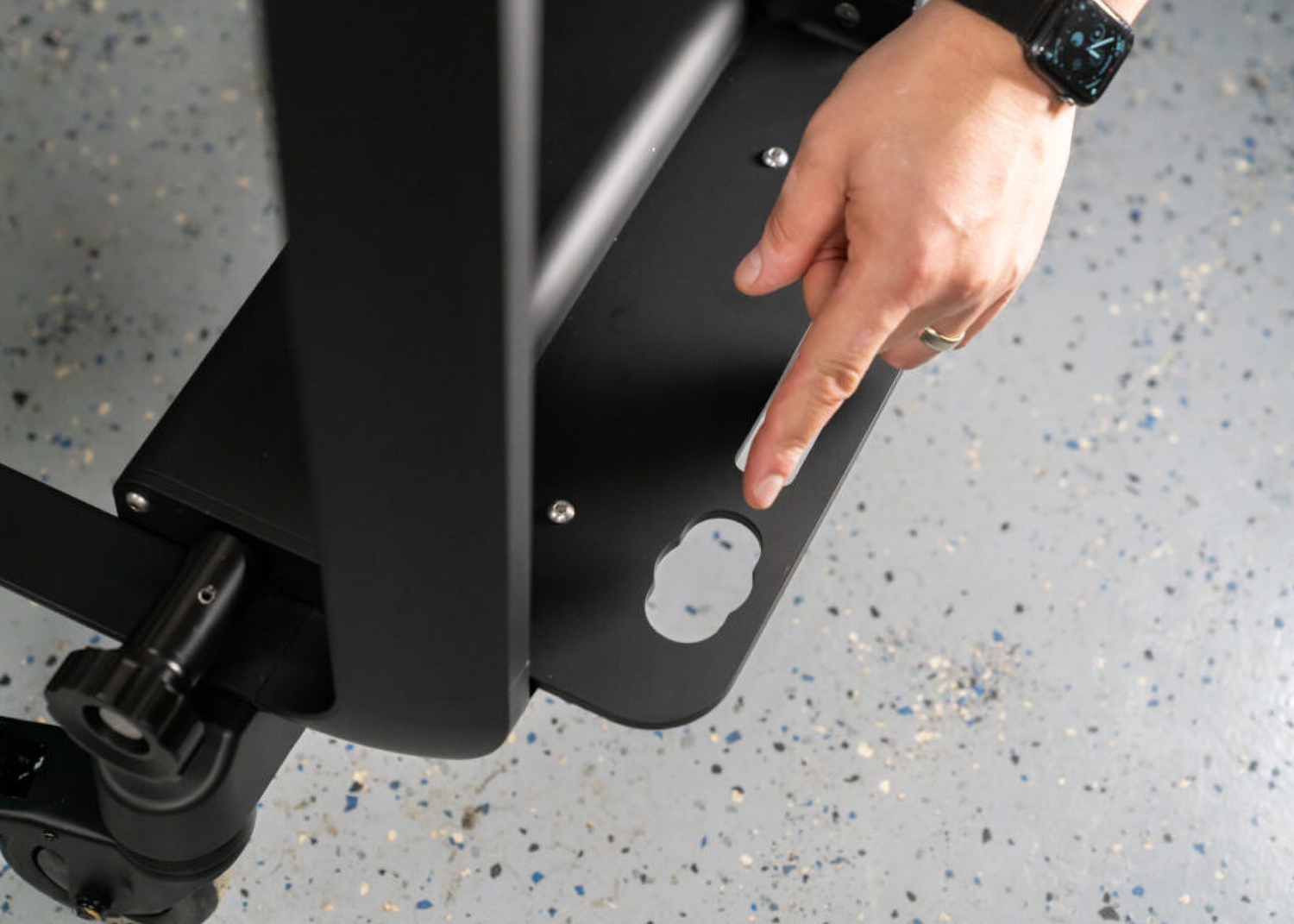
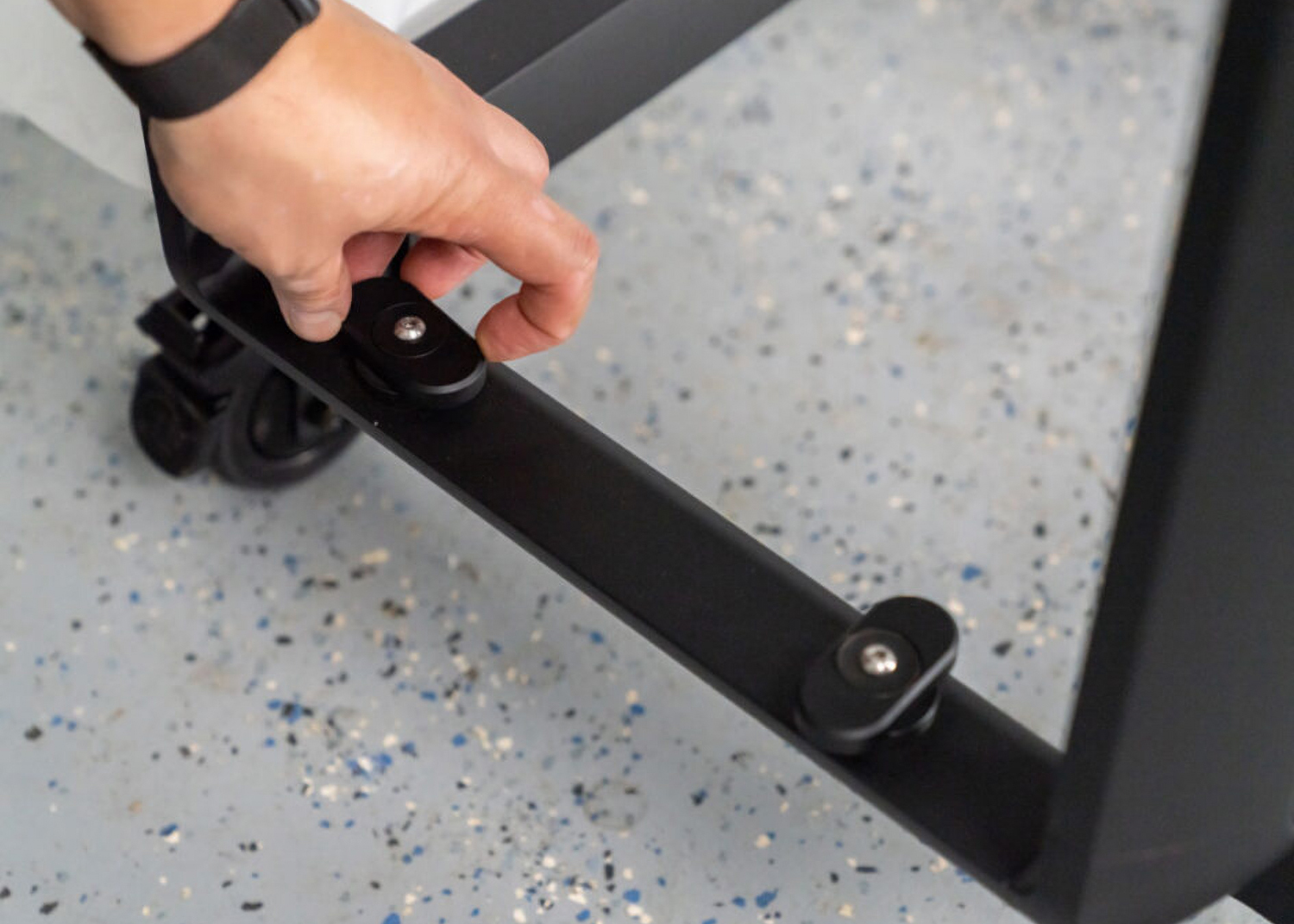
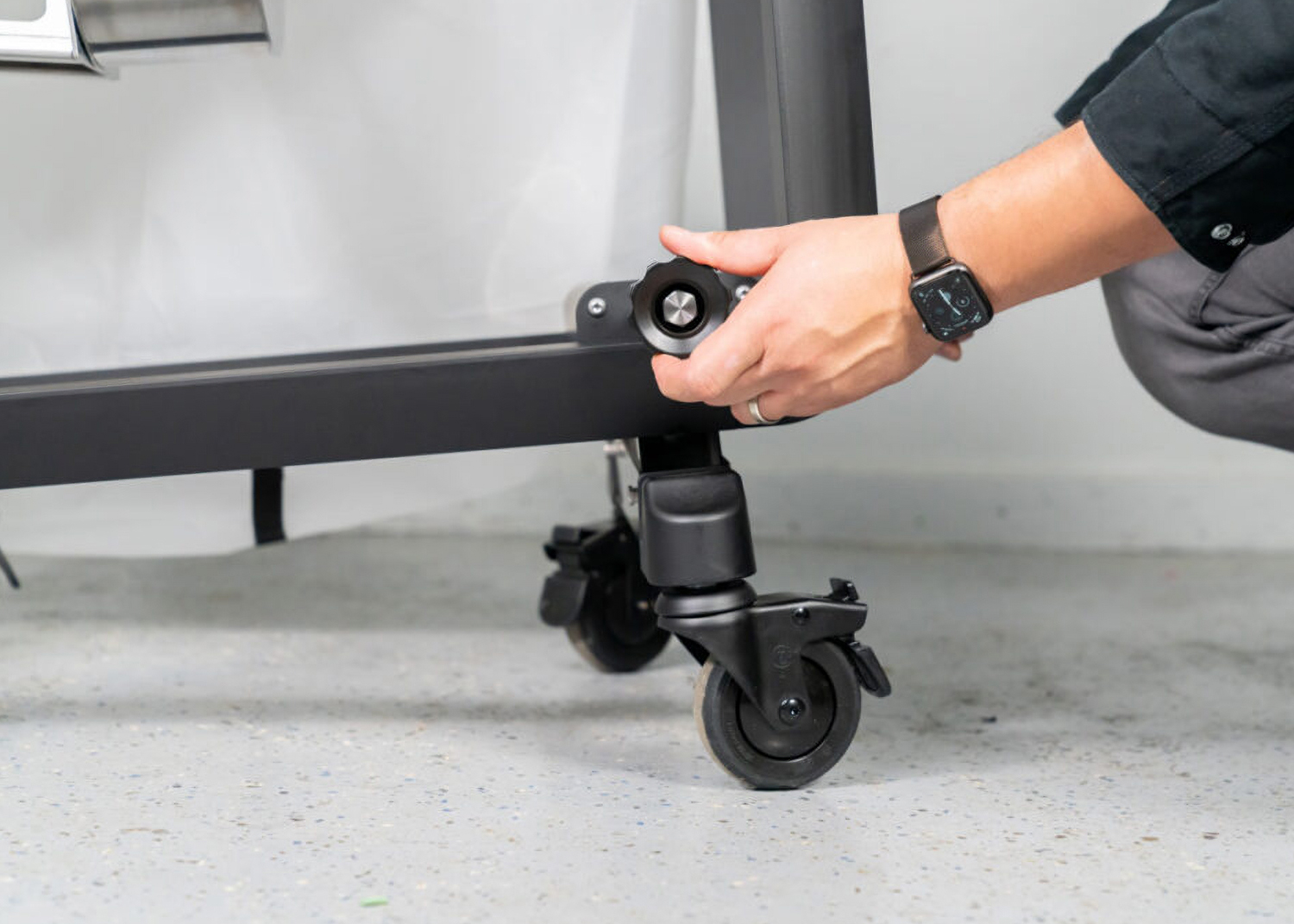
Rapid Tool-Free Breakdown
Tool-free disassembly allows operators to break down and clean the system quickly between processing runs.
This reduces downtime and improves operational continuity in high-throughput environments.
Modular Scalability
Scalability was another critical requirement.
We developed a fast mechanical coupling system that allows multiple units to be ganged together quickly and securely. Facilities can expand capacity incrementally without redesigning infrastructure.
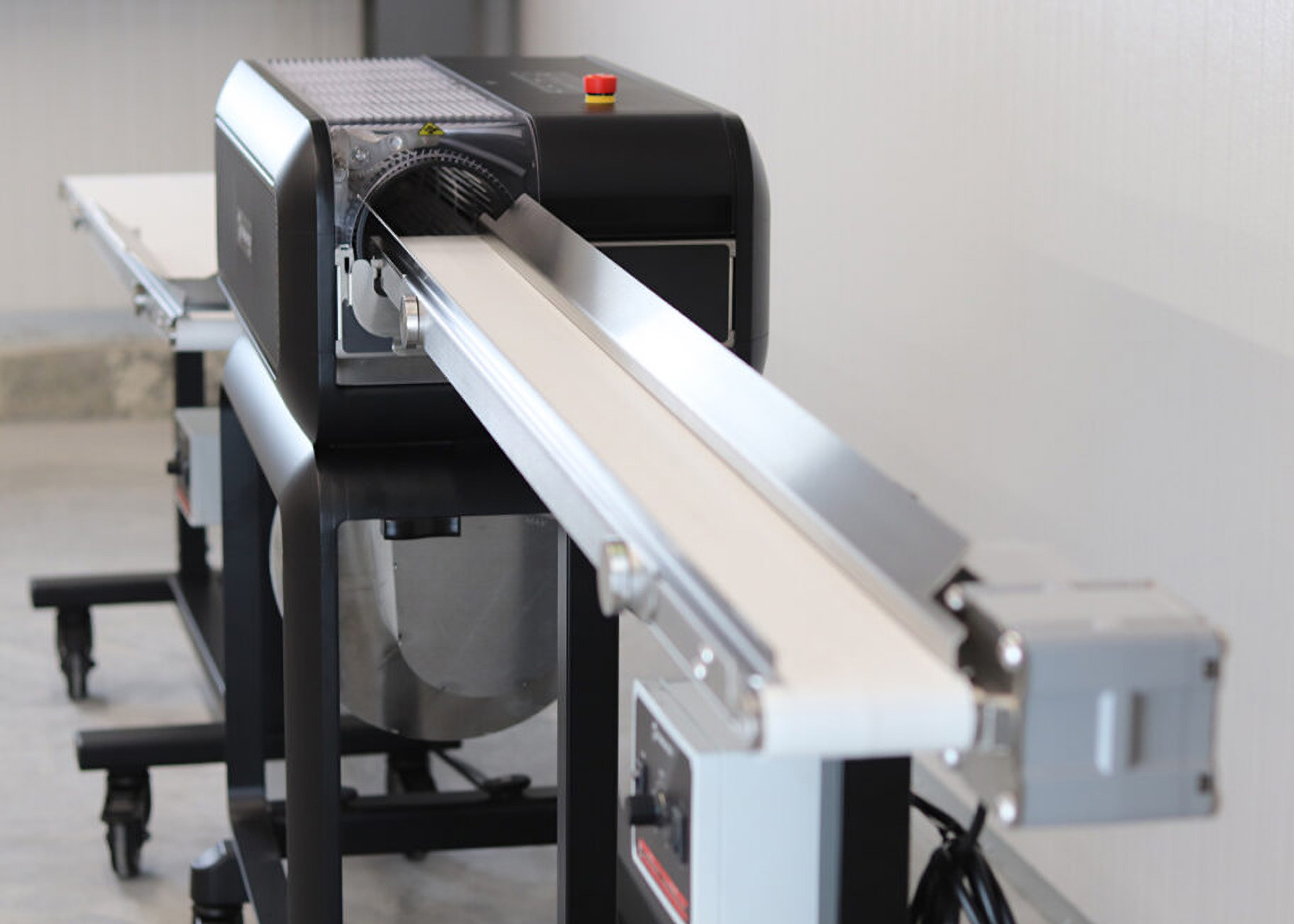
Additionally, the platform required the ability to tilt when positioned between feed conveyors. This was achieved through an integrated winch mechanism that allows one side of the unit to be raised easily, adjusting the machine’s pitch angle without external supports. The result is a modular architecture that:
• Supports conveyor-fed workflows
• Enables tandem operation
• Allows quick mechanical linking
Growth does not require full system replacement, only intelligent expansion.
Additionally, the platform required the ability to tilt when positioned between feed conveyors. This was achieved through an integrated winch mechanism that allows one side of the unit to be raised easily, adjusting the machine’s pitch angle without external supports. The result is a modular architecture that:
• Supports conveyor-fed workflows
• Enables tandem operation
• Allows quick mechanical linking
Growth does not require full system replacement, only intelligent expansion.
Interface & Controls
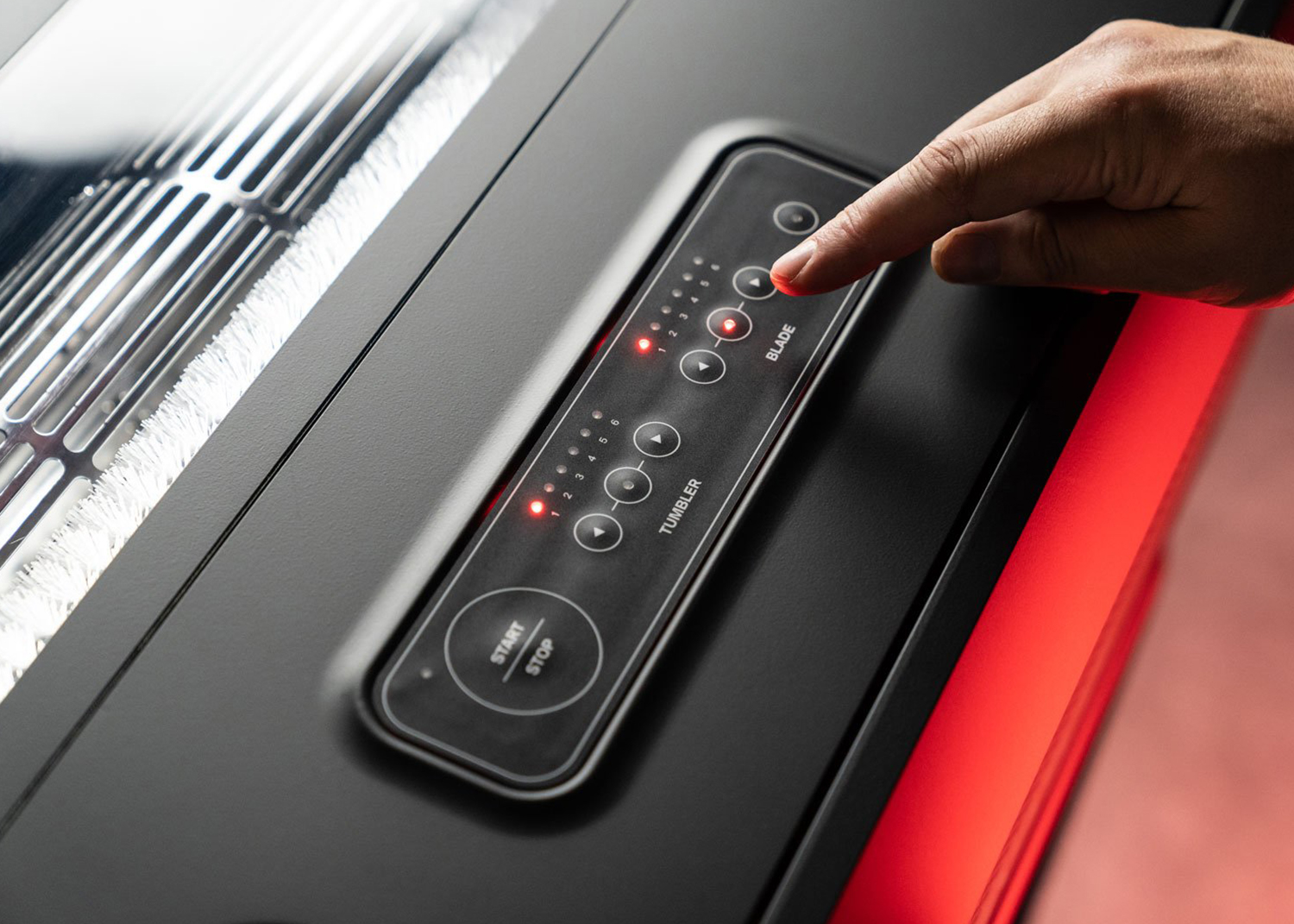
The control interface was intentionally reduced and clarified.
The objective was to:
• Minimize visual clutter
• Make operation intuitive
• Reduce onboarding time for new users
• Create a more elegant and approachable experience
Controls were simplified to essential functions, organized logically, and presented with a cleaner visual hierarchy.
• Minimize visual clutter
• Make operation intuitive
• Reduce onboarding time for new users
• Create a more elegant and approachable experience
Controls were simplified to essential functions, organized logically, and presented with a cleaner visual hierarchy.
The Outcome
The Hybrid™ platform gained:
• A stronger and more contemporary brand presence
• Improved serviceability and cleaning efficiency
• Faster modular scaling
• Increased appeal across a wider customer base
The Hybrid™ platform successfully unites industrial reliability with a contemporary, design-conscious presence. Its frame-based exoskeleton exposes precision components, making maintenance and cleaning intuitive and tool-free, while modular scalability allows the system to grow with user needs. Simplified controls and a refined form elevate usability and market perception, strengthening the brand and broadening appeal—all while honoring the machine’s workhorse heritage.
• A stronger and more contemporary brand presence
• Improved serviceability and cleaning efficiency
• Faster modular scaling
• Increased appeal across a wider customer base
The Hybrid™ platform successfully unites industrial reliability with a contemporary, design-conscious presence. Its frame-based exoskeleton exposes precision components, making maintenance and cleaning intuitive and tool-free, while modular scalability allows the system to grow with user needs. Simplified controls and a refined form elevate usability and market perception, strengthening the brand and broadening appeal—all while honoring the machine’s workhorse heritage.
Watch The Video
Mobile Section
HYBRID™ Trimmer
Triminator
Overview
As specialty crop processing evolves, so do its users. The Hybrid™ platform already had a proven internal mechanical system. Our role was to reimagine the exterior architecture, creating a housing that elevated the brand, improved serviceability, and expanded its appeal beyond its traditional customer base. The objective was not to reinvent the machine’s performance but to redefine how it is perceived, maintained, and integrated into modern production environments.
CLIENT
Triminator
ROLE
Design Language Strategy
Industrial Design
Interface Design
Mechanical Design
Industrial Design
Interface Design
Mechanical Design
Client Website
The Challenge
The client had established strong loyalty within a rugged, hands-on customer base. These operators valued durability and sweat-equity practicality. As the market expanded into new demographics and a broader range of professional users, it became clear the product needed to evolve visually and experientially.
The question became: How can the device honor its powerful, workhorse heritage while also appealing to a wider audience with evolving expectations around form, usability, and overall product experience?
Brand & Visual Strategy
Rather than enclosing the internals in a heavy industrial shell, we developed a frame-based exoskeleton architecture.
The design intentionally exposes precision components, allowing users to see the mechanical capability of the system up close. This reinforces trust and communicates performance through transparency.
The silhouette shifts away from rugged utility cues toward a more refined, consumer-technology inspired form language:
• Cleaner geometry
• Controlled surfacing
• Intentional negative space
• Reduced visual noise
The result is a machine that feels powerful and capable, yet more sophisticated and contemporary. It bridges two worlds. Industrial reliability and modern product design.
The design intentionally exposes precision components, allowing users to see the mechanical capability of the system up close. This reinforces trust and communicates performance through transparency.
The silhouette shifts away from rugged utility cues toward a more refined, consumer-technology inspired form language:
• Cleaner geometry
• Controlled surfacing
• Intentional negative space
• Reduced visual noise
The result is a machine that feels powerful and capable, yet more sophisticated and contemporary. It bridges two worlds. Industrial reliability and modern product design.
Tailoring Form to Suit Application
The simplified exo-frame was not purely aesthetic. It was engineered to:
• Provide rapid access to key internal components
• Reduce unnecessary surface area where debris can accumulate
• Make maintenance intuitive and visible
The simplicity of the form was intentional — fewer seams, fewer hidden recesses, fewer collection points. The design reduces contamination risk while supporting regulated agricultural environments.
• Provide rapid access to key internal components
• Reduce unnecessary surface area where debris can accumulate
• Make maintenance intuitive and visible
The simplicity of the form was intentional — fewer seams, fewer hidden recesses, fewer collection points. The design reduces contamination risk while supporting regulated agricultural environments.
Rapid Tool-Free Breakdown
Tool-free disassembly allows operators to break down and clean the system quickly between processing runs.
This reduces downtime and improves operational continuity in high-throughput environments.
Modular Scalability
Scalability was another critical requirement.
We developed a fast mechanical coupling system that allows multiple units to be ganged together quickly and securely. Facilities can expand capacity incrementally without redesigning infrastructure.
Additionally, the platform required the ability to tilt when positioned between feed conveyors. This was achieved through an integrated winch mechanism that allows one side of the unit to be raised easily, adjusting the machine’s pitch angle without external supports. The result is a modular architecture that:
• Supports conveyor-fed workflows
• Enables tandem operation
• Allows quick mechanical linking
Growth does not require full system replacement, only intelligent expansion.
Additionally, the platform required the ability to tilt when positioned between feed conveyors. This was achieved through an integrated winch mechanism that allows one side of the unit to be raised easily, adjusting the machine’s pitch angle without external supports. The result is a modular architecture that:
• Supports conveyor-fed workflows
• Enables tandem operation
• Allows quick mechanical linking
Growth does not require full system replacement, only intelligent expansion.
Interface & Controls
The control interface was intentionally reduced and clarified.
The objective was to:
• Minimize visual clutter
• Make operation intuitive
• Reduce onboarding time for new users
• Create a more elegant and approachable experience
Controls were simplified to essential functions, organized logically, and presented with a cleaner visual hierarchy.
• Minimize visual clutter
• Make operation intuitive
• Reduce onboarding time for new users
• Create a more elegant and approachable experience
Controls were simplified to essential functions, organized logically, and presented with a cleaner visual hierarchy.
The Outcome
The Hybrid™ platform gained:
• A stronger and more contemporary brand presence
• Improved serviceability and cleaning efficiency
• Faster modular scaling
• Increased appeal across a wider customer base
The Hybrid™ platform successfully unites industrial reliability with a contemporary, design-conscious presence. Its frame-based exoskeleton exposes precision components, making maintenance and cleaning intuitive and tool-free, while modular scalability allows the system to grow with user needs. Simplified controls and a refined form elevate usability and market perception, strengthening the brand and broadening appeal—all while honoring the machine’s workhorse heritage.
• A stronger and more contemporary brand presence
• Improved serviceability and cleaning efficiency
• Faster modular scaling
• Increased appeal across a wider customer base
The Hybrid™ platform successfully unites industrial reliability with a contemporary, design-conscious presence. Its frame-based exoskeleton exposes precision components, making maintenance and cleaning intuitive and tool-free, while modular scalability allows the system to grow with user needs. Simplified controls and a refined form elevate usability and market perception, strengthening the brand and broadening appeal—all while honoring the machine’s workhorse heritage.